



Chatbot UI Design Services For Businesses

Your model may be accurate, but users judge it by the interface they interact with. Futurize Labs provides chatbot UI design services that make confidence, limitations, and escalation paths clear from the first message. We cover conversation flow architecture, visual systems, accessibility, and engineering handoff, helping your assistant achieve measurable adoption without disrupting the tools and systems your teams already use.

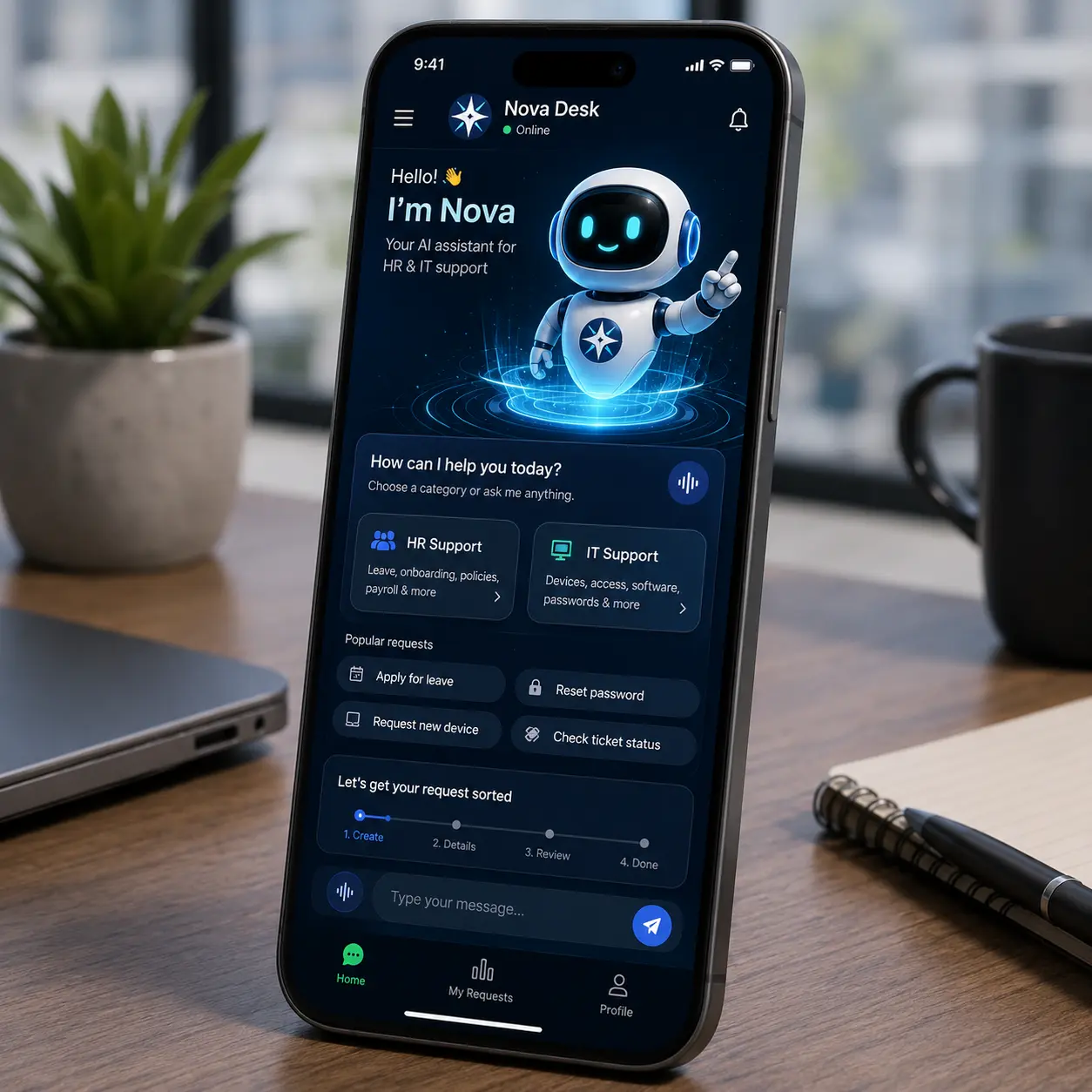
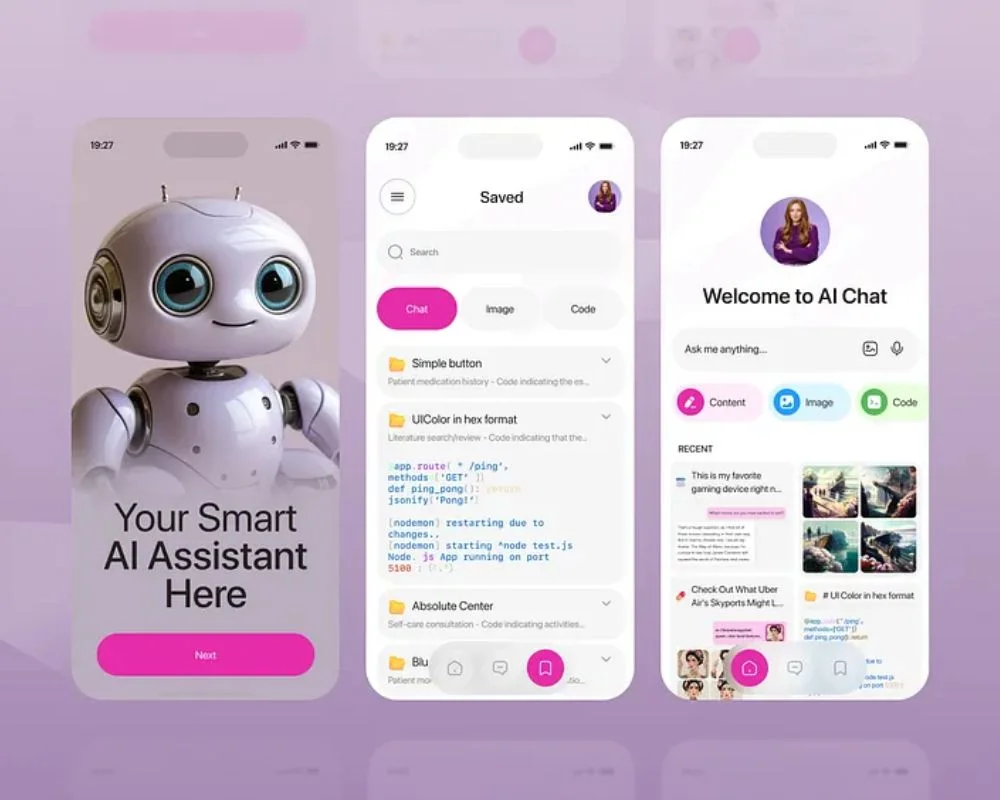
AI Chatbot UI Design Services showcasing a modern chatbot interface on a smartphone.

Trusted By Teams In Healthcare, Finance, And Public-Sector Technology.

Red Box logo
RenewMe logo
Samory logo
WizSpeed logo
Beauté Cosmique logo
New Look Films logo
Simple Sips and Sweets logo
Red Box logo
RenewMe logo
Samory logo
WizSpeed logo
Beauté Cosmique logo
New Look Films logo
Simple Sips and Sweets logo

Our Core Chatbot UI Design Capabilities

Five capabilities carry most of the risk in a conversational product. As a chatbot UI design company, we address the specific issues that cause users to disengage, including unclear scope, misplaced trust, ineffective escalation paths, and accessibility gaps identified too late. We resolve each of these areas before visual design begins.

Conversation flow architecture

We map every turn, branch, fallback, and dead end in your dialogue, then document what the assistant does at each one. Your users always know what the system handles and what to say next, and your team gets a shared reference that settles scope questions early.
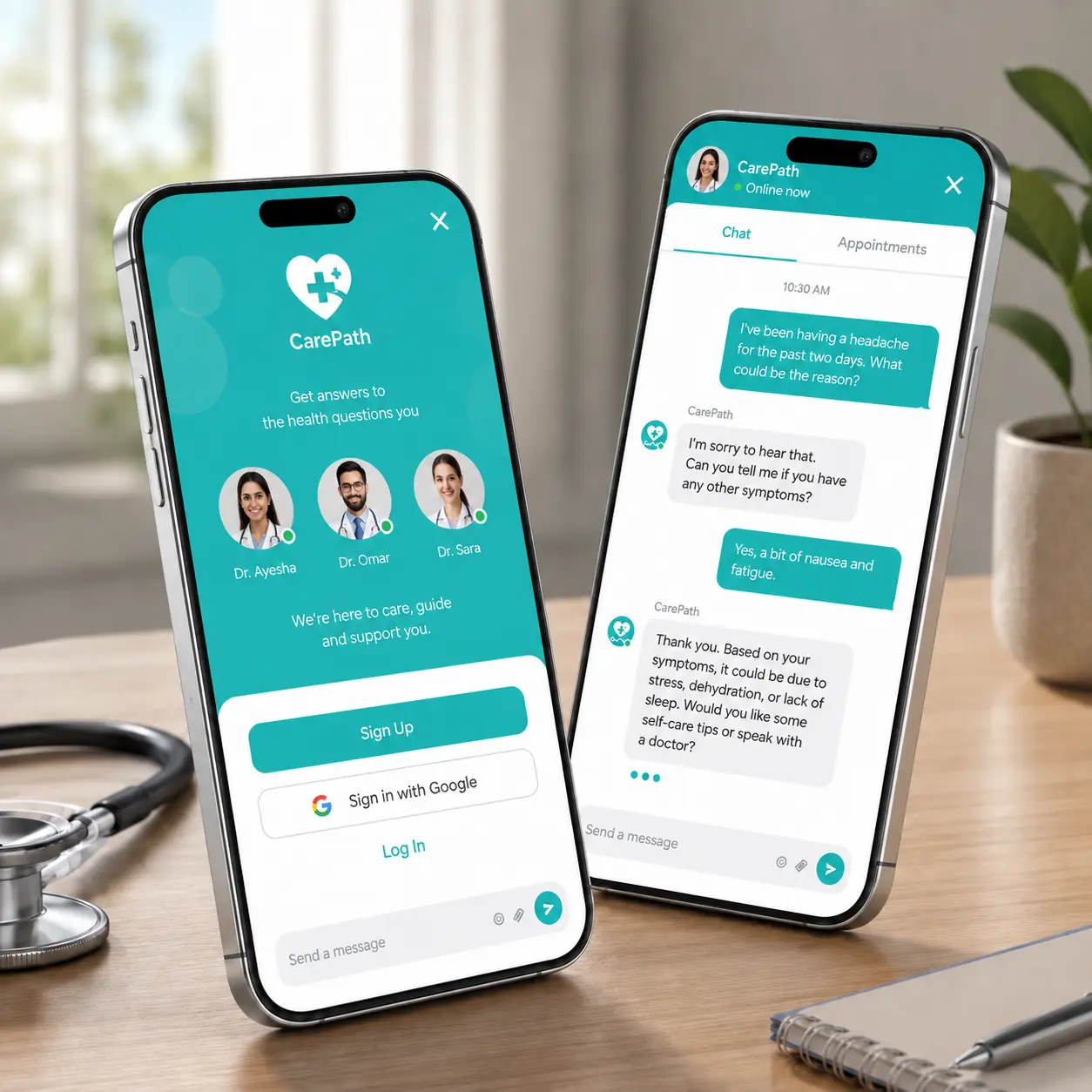
Confidence and refusal states

We give your assistant a visual vocabulary for certainty, uncertainty, and questions it cannot answer. When the interface separates a grounded answer from a hedged one, users calibrate their reliance correctly, which reduces both over-trust and the tickets that follow a confident mistake.

Human handoff and escalation design

We design the path to a person before we design the happy path. Context handover, queue position, wait-state messaging, and transcript continuity are all specified, so the moment your assistant reaches its limit reads as human oversight rather than abandonment.

Accessible, compliant interfaces

We meet WCAG 2.2 AA and Section 508 requirements across focus order, keyboard operation, screen-reader announcements, and contrast in every state. Your regulated product stays defensible under audit, and accessibility never turns into a rebuild in the final weeks before launch.

Design systems and developer handoff

We deliver tokenized components, documented states, and specifications written for implementation. Your engineers build without interpreting intent, the design holds together as you add flows and surfaces, and the work integrates with the component libraries your teams already maintain.

47+

conversational interfaces designed

5–7 weeks

typical time to launch-ready UI

28%

average improvement in task completion and self-service resolution

16+

regulated-industry engagements delivered

Chatbot UI Design Services We Deliver

Every engagement draws on the same eight workstreams, scoped to your product's complexity and compliance exposure. Some teams need the full sequence from flow architecture through post-launch review. Others bring us in for a single layer, most often escalation design or accessibility remediation.

Conversation Flow Design

We diagram the complete dialogue: entry points, quick replies, branching logic, fallback handling, and recovery states. Before visual work begins, your team can see how a conversation succeeds and how it recovers when the model misreads intent. That map becomes the shared contract between design, engineering, and content, and every later deliverable builds on it.

Visual Interface and Component Design

We design bubbles, input fields, attachment handling, typing indicators, and rich cards as one coherent system rather than a set of unrelated screens. Each element carries a share of the clarity and the brand, with defined behaviour at every width and state. The result reads as a native part of your product.

Confidence and Source Attribution UI

Through our chatbot UI design services, we create citation patterns, confidence markers, and grounding signals for assistants that respond using your documents, records, or live data. Users can verify where each response comes from without losing focus on the answer itself, making the assistant more transparent and trustworthy.

Human Escalation and Handoff Design

We design context handover, wait-state messaging, expectation setting, and transitions that carry the full conversation across to a live agent. Users escalate at their worst moment, so nobody should repeat themselves or wait without knowing how long. Your assistant's weakest moment becomes the point where your service feels most reliable.

Accessibility and Compliance Design

We design keyboard navigation, screen-reader semantics, focus management, live-region behaviour, and contrast that satisfy WCAG 2.2 AA and Section 508. Coverage includes streaming responses and dynamic states, where automated testing routinely misses failures. Compliance shapes the design decisions instead of arriving later as a remediation backlog.

Mobile and Multi-Context Chat UI

Our chatbot UI design approach adapts layout, content density, message length, and interaction patterns to each device and context, from clinical applications to retail checkout. We carefully address keyboard overlap, scroll position, and long streaming responses on smaller screens, keeping the experience consistent without overlooking how and where it is used.

Design System and Handoff

We deliver a documented chatbot UI component library with tokens, states, usage rules, and the reasoning behind each decision. Your engineers implement faster because the ambiguity is already resolved, and the interface stays coherent as the product grows past its first release. This is what separates a mockup from a maintainable system.

Post-Launch UI Iteration

We review conversation logs at day 30 and day 90 to identify where users abandon interactions, repeat themselves, or escalate unnecessarily. These insights help us refine the chatbot user interface design based on real behavior that wireframes and usability sessions may not reveal. Each improvement is guided by evidence, allowing the interface to perform better over time.

A Better AI Experience Begins with Better UI

Nearly 3 in 4 customers want clear disclosure when they are interacting with AI. When the interface feels confusing, users lose trust and abandon the conversation. Futurize Labs designs chatbot UIs that clarify every step, simplify complex responses, and guide users toward successful outcomes.

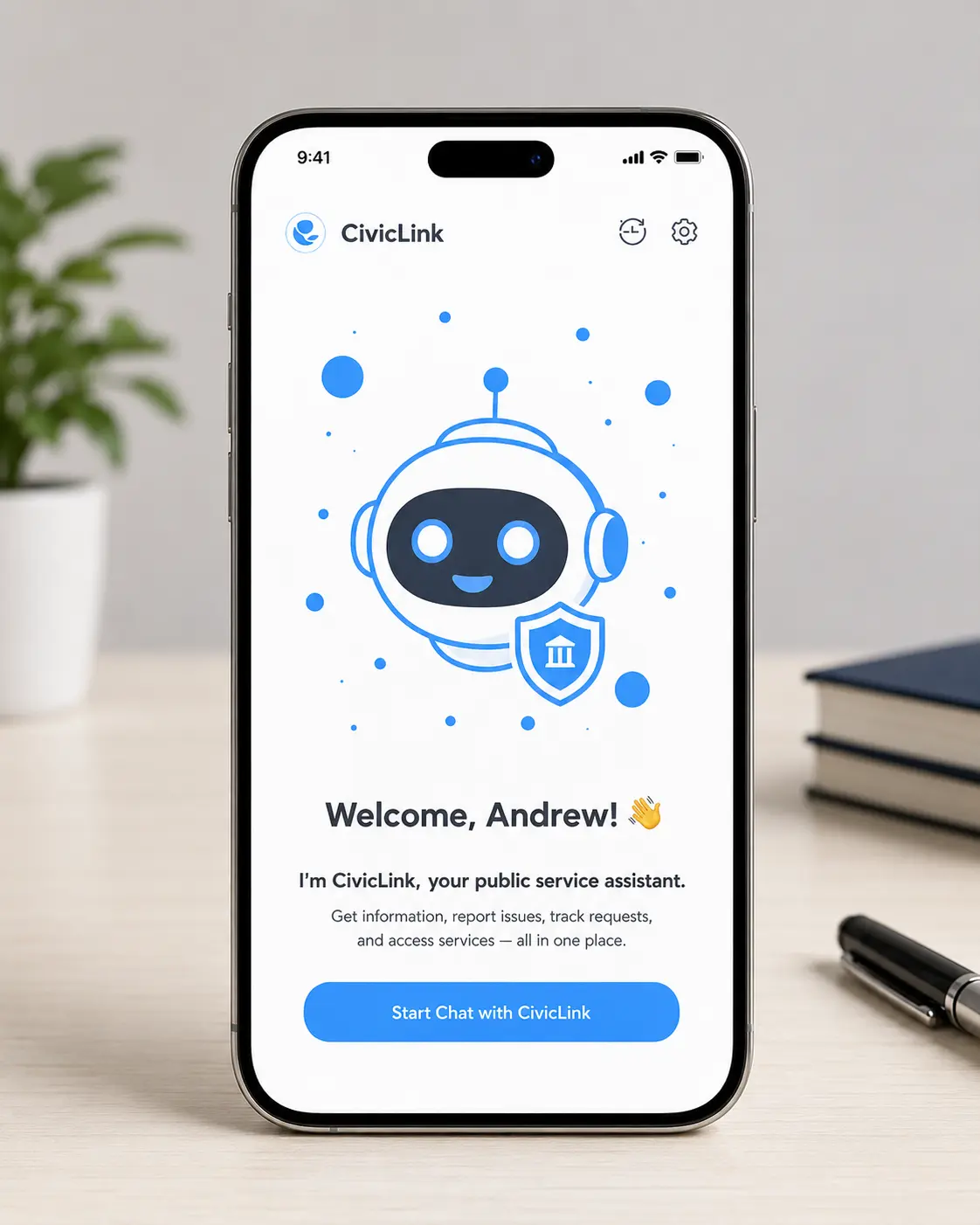
Chatbot user interface on a device, highlighting Futurize Labs chatbot UI design services.

Selected Chatbot UI Design Results

The examples below show how structured chatbot UI design can improve trust, task completion, accessibility, and self-service performance. The names and figures are representative and should be replaced with verified Futurize Labs project data before publication.

CarePath Health: Trusted Clinical Support Chatbot

Challenge

CarePath Health needed users to trust its clinical chatbot without treating every answer as medical advice. Some users accepted responses without checking sources, while others avoided the assistant entirely.

Solution

We redesigned the interface with confidence states, source citations, clear limits, and direct access to human support for sensitive queries. The flows were tested with realistic patient tasks and accessibility checks.

Impact

  • 31.6% increase in self-service resolution
  • 22.4% fewer unnecessary escalations
  • Passed WCAG 2.2 AA review
Case study visual for CarePath Health: Trusted Clinical Support Chatbot

Trusted by Clients Building Better AI Experiences

The teams we work with usually arrive with a functioning model and a stalled rollout. What they value afterwards tends to be the same thing: an interface their users understand, their compliance reviewers approve, and their engineers can build without a translation layer.

Futurize Labs redesigned our chatbot UI into a much clearer experience. Users now understand what the assistant can do, complete requests with fewer steps, and reach a support agent without getting stuck.

Portrait of Olivia Bennett, Director of Customer Experience at Northstar Commerce

Olivia Bennett

Director of Customer Experience

Northstar Commerce

Their user interface design work brought structure to a product that already had strong AI behind it. The screens, response states, and developer documentation were practical, consistent, and easy for our team to implement.

Portrait of Marcus Chen, Vice President of Product at Clarion Health Systems

Marcus Chen

Vice President of Product

Clarion Health Systems

We needed conversational chatbot UI design that could support citations, long answers, and complex follow-up questions without overwhelming users. Futurize Labs understood the challenge and delivered an interface that feels simple.

Portrait of Sophia Reynolds, Head of Digital Products at Verity Knowledge Labs

Sophia Reynolds

Head of Digital Products

Verity Knowledge Labs

What I appreciated most was their attention to the details people usually miss. Loading states, error recovery, human handoffs, and mobile behavior were all considered. The finished chatbot feels much more reliable now.

Portrait of Daniel Foster, Chief Technology Officer at BridgePoint Financial

Daniel Foster

Chief Technology Officer

BridgePoint Financial

Types of AI Chatbot Interfaces We Design

Different AI chatbots require different interface structures, visual patterns, and user journeys. We design each chatbot UI around its purpose, audience, conversation flow, supported actions, and the level of guidance users need to complete tasks confidently.

Conversational AI Chatbot UI

We design conversational interfaces for open-ended AI interactions where users can ask questions in their own words. The UI includes clear message hierarchy, suggested prompts, response states, source references, feedback controls, and accessible escalation options.

AI Voice Agent UI Design

We design visual interfaces that support voice-based AI agents across web, mobile, and in-app environments. These interfaces show listening states, live transcripts, confirmations, call controls, progress indicators, and clear options for correcting or repeating information.

Transactional Chatbot UI Design

Transactional chatbot interfaces help users complete actions such as booking appointments, placing orders, making payments, or updating account information. We design guided steps, input validation, progress indicators, confirmation screens, and recovery paths that reduce errors.

Multilingual Chatbot UI

We create flexible chatbot interfaces that support multiple languages, regional formats, and cultural preferences. Our designs account for changing text lengths, language selectors, right-to-left layouts, local date formats, and consistent interaction patterns across every supported language.

Enterprise Chatbot UI Design

Enterprise chatbot interfaces support employees across HR, IT, finance, sales, and operations. We design secure, information-rich dashboards with contextual data, role-based actions, approval steps, system notifications, and quick access to frequently used internal workflows.

Lead Generation Chatbot UI

We design lead generation chatbot interfaces that collect user details, qualify prospects, recommend relevant services, and schedule consultations. The experience uses progressive questions, selectable answers, clear value prompts, and focused calls to action without overwhelming users.

Customer Support Chatbot UI

Customer support chatbot interfaces must remain clear when users are already frustrated. We design visible support options, quick replies, ticket status cards, order information, troubleshooting steps, and human escalation paths that help conversations move toward resolution.

RAG-Based Knowledge Chatbot UI

We design chatbot interfaces for assistants that answer from internal documents, policies, databases, and knowledge bases. The UI includes citations, source previews, confidence markers, related resources, and feedback controls that help users verify each response.

Embedded AI Assistant UI

Embedded assistants operate inside dashboards, portals, and software applications. We design contextual interfaces that work alongside the surrounding content, helping users understand data, complete actions, and receive relevant guidance without leaving their current workflow.

Multimodal AI Chatbot UI

We design multimodal chatbot interfaces that support text, voice, images, documents, video, and interactive content. Each input type follows a consistent visual system so users can switch between formats without losing conversation context or progress.

Industries We Design Chatbot Interfaces For

Conversational design constraints change sharply across sectors, and a pattern that works in retail can create real liability in healthcare. We design against the regulatory, accessibility, and user-context requirements your industry actually carries.

Clinical chatbot interfaces carry HIPAA exposure and patient-safety implications most consumer bots never face. The boundary between information and advice has to hold under stress, for users who may be anxious, unwell, or reading on a phone.

  • Symptom intake and triage flows with explicit limitation messaging
  • Confidence and source signals for provider-facing clinical assistants

Agency chatbots answer to stricter accessibility duties and serve an audience nobody gets to pre-qualify. Interfaces must work across the full range of devices, connection speeds, reading levels, and assistive technologies your citizens actually use.

  • Section 508 and WCAG 2.2 AA compliant conversational interfaces
  • Plain-language flows tested with a genuinely broad public audience

Financial chat interfaces design around disclosure obligations that constrain what the assistant may say. The line between general guidance and regulated advice needs to be visible in the interface, not buried in terms your users have already scrolled past.

  • Clear visual boundaries between general guidance and regulated advice
  • Audit-friendly interaction, confirmation, and record-keeping patterns

Fast-moving products still need a conversational surface users will trust with their money. Rapid iteration is an advantage until transparent handling of sensitive actions gets deferred past the growth targets it was meant to support.

  • Onboarding assistants that reduce drop-off without obscuring commitments
  • Transparent confirmation patterns for sensitive financial actions

Claims and policy questions demand accuracy at moments when your customer is already under pressure. The interface has to gather structured detail without feeling like an interrogation, and escalate cleanly when a case exceeds what automation should handle.

  • Guided claims-intake flows that collect structured detail conversationally
  • Escalation paths designed for complex, high-stakes, or distressed cases

Retail chatbots are designed around the conversion path as much as the conversation. Every additional turn is a chance to lose the customer, so guidance has to be measurably faster than browsing your catalogue directly.

  • Product discovery and guided-selling flows that shorten decisions
  • Cart, order, and returns support with clear status at each step

High-volume support rewards precise self-service design more than almost any other sector. Small deflection improvements compound quickly at your scale, but only when the interface is honest about which problems it can actually resolve.

  • Troubleshooting flows with clearly signposted escalation at every dead end
  • Account and billing interactions built for clarity over cleverness

Booking and service chat has to work under time pressure, poor connectivity, and genuine stress. A customer rebooking a missed connection at midnight will not explore your interface, so the fastest useful action must be immediately visible.

  • Itinerary, change, and rebooking flows optimised for urgent situations
  • Multilingual, mobile-first interaction patterns that degrade gracefully

Learning assistants have to teach without overwhelming support without simply supplying answers. The interface should scaffold understanding at each learner's pace while remaining usable across the devices and needs your student population brings.

  • Progressive guidance and explanation UI that reveals depth on request
  • Accessible interfaces designed for a diverse learner population

Dispatcher- and customer-facing bots operate under accuracy constraints where a confident wrong answer has physical consequences. Uncertainty in the underlying data has to surface in the interface rather than being smoothed over for a cleaner response.

  • Status and tracking query interfaces built around live, incomplete data
  • Honest handling and clear labelling of uncertain or missing information

Product assistants can lift adoption and deflect support load at once when designed into the workflow rather than beside it. The assistant should know what your user is looking at and what they were trying to do beforehand.

  • In-app guidance and onboarding chat tied to real product state
  • Embedded assistants that sit alongside core workflows without interrupting them

Operational assistants serve technical, expert users working in conditions that punish fussy interfaces. Gloves, glare, noise, and time pressure all shape what the interface can reasonably ask of someone standing on your floor.

  • Dense, efficient interfaces designed for real on-floor working conditions
  • Fast retrieval from internal documentation, manuals, and maintenance records

Teams shipping AI need interfaces built around the model's actual behaviour, including the parts still unreliable. The interface is where expectations get set, and setting them accurately costs far less than recovering users who were promised more.

  • Confidence, refusal, and user-correction patterns built into core flows
  • Transparency signals that set expectations the model can consistently meet

How Our Chatbot UI Design Company Delivers Value

We turn capable AI models into clear, usable products by improving trust, accessibility, interaction flow, and implementation readiness across every stage of the chatbot experience.

  • Make capabilities, limitations, confidence levels, sources, and escalation options clear to users.
  • Reduce friction through intuitive conversation flows, accessible interactions, and responsive layouts across web and mobile.
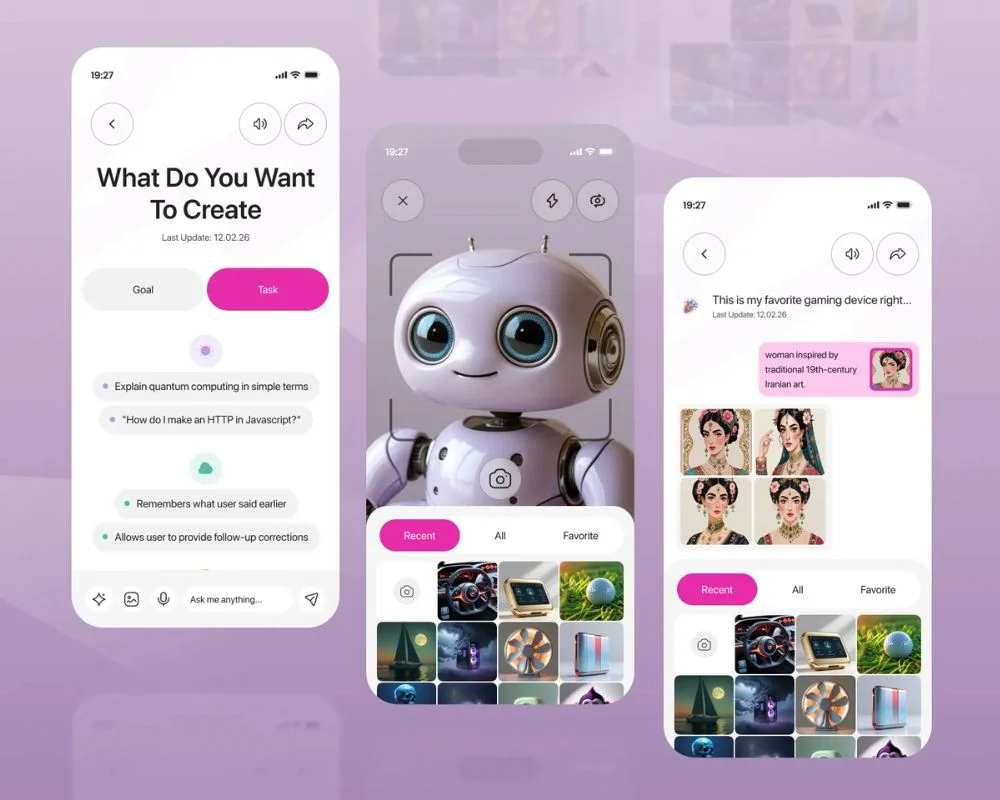
Chatbot UI on a phone delivering clearer AI conversations and guided workflows.

Compliance and Accessibility Standards We Meet

Regulated products fail audits for interface reasons far more often than for model reasons. We design chatbot interfaces against the frameworks your product is accountable to, starting at the first flow diagram rather than the final review.

GDPR certification logo

GDPR

General Data Protection Regulation

CCPA certification logo

CCPA

California Consumer Privacy Act

UK Data Protection Act 2018 certification logo

UK Data Protection Act 2018

Governs lawful personal data handling.

SOC 2 certification logo

SOC 2

System and Organization Controls Type II

HIPAA certification logo

HIPAA

Health Insurance Portability and Accountability Act

Why Choose Futurize Labs For Chatbot Interface Design?

Many studios can create an attractive chat window. As a custom chatbot design company, we focus on what happens after launch: whether the interface remains clear, consistent, accessible, and scalable as real conversations, new flows, and compliance requirements evolve.

01

We design the failure paths first

Most teams polish the happy path and improvise the rest once the deadline arrives. We design escalation, refusal, error, and recovery states up front, because trust is won or lost at exactly those moments. An assistant that handles its limits gracefully earns more confidence than one that is occasionally brilliant and unpredictably wrong.

02

We speak engineering, not just design

Our deliverables include tokenized components, documented states, and specifications written for implementation rather than for a presentation slide. As a chatbot UI design company, we help developers build directly from the work without repeated clarification or interpretive guesswork. This shortens development and keeps the final product closely aligned with what stakeholders approved.

03

We are built for regulated products

Accessibility and compliance are not a final review handed to a specialist once the visuals are signed off. They shape structural decisions from the first flow diagram through to the last handoff file, which is why regulated clients tend to clear audits on the first attempt and avoid the cost of retrofitting later.

Technology Stack for Chatbot UI Design
and Development

Our AI chatbot design services use a modern technology stack to design, prototype, build, test, and optimize chatbot interfaces across web, mobile, and embedded applications. The tools selected for each project depend on the platform, conversational complexity, chatbot integration requirements, and accessibility standards.

ChatGPT logo
ChatGPT
Claude logo
Claude
Gemini logo
Gemini
Mistral AI logo
Mistral AI
PaLM 2 logo
PaLM 2
BLOOM logo
BLOOM
ERNIE logo
ERNIE
Vicuna logo
Vicuna
Turing logo
Turing
Megatron-LM logo
Megatron-LM

Our Chatbot UI Design Process

Our engagements follow five stages, structured so key decisions are made while they are still practical and cost-effective to change. With our AI chatbot development services, we make each stage produce a clear deliverable your team can review, approve, and build upon, rather than a simple progress update.

We learn your users, their tasks, your constraints, and the regulatory exposure your product carries. That includes an honest assessment of whether conversation is the right pattern at all, since some problems are better served by a form or a well-placed button. Ending discovery with a smaller scope is a successful outcome.

Frequently Asked Questions

The questions below cover what teams usually ask before an engagement begins, from cost drivers to how design work divides against development. If your situation is not covered here, a discovery call is generally faster than an email exchange.

Chatbot UI design services typically cost $3,000 to $15,000 for a focused project, while complex enterprise interfaces may range from $20,000 to $50,000 or more. The final price depends on the depth of design and delivery required for the final solution.

Costs vary based on conversation complexity, number of screens and user flows, mobile and web coverage, accessibility needs, design-system requirements, prototyping, user testing, developer handoff, and the level of post-launch optimisation included.

The best mobile-first chatbot interface design starts with simplicity, speed, and ease of use. Keep the layout clean, use large touch-friendly buttons, provide clear response options, and avoid long blocks of text. The chatbot should also adapt smoothly to different screen sizes and keep important actions within easy reach.

Useful features such as quick replies, file uploads, voice input, and smooth scrolling can make the experience more convenient. Fast loading, accessible typography, clear error messages, and consistent conversation states also help create a chatbot interface that feels natural and easy to use on mobile devices.

A typical engagement covers conversation flow architecture, visual component design, confidence and escalation states, accessibility compliance, and a documented design system for handoff. Most also include post-launch iteration based on real conversation logs at day 30 and day 90. Scope is agreed during discovery, so your team can engage us for the full sequence or a single layer.

UI is the visual and interactive layer: bubbles, buttons, inputs, indicators, and states. UX is the broader experience, covering flow logic, task success, expectation setting, and how well the conversation serves your user's underlying goal. The distinction matters for scoping, but the two are inseparable in practice, so we design them together in a single engagement.

A chatbot UI design project typically takes six to twelve weeks. The exact timeline depends on the number of conversation flows, supported platforms, integrations, and compliance requirements. Flow planning and validation usually take the most time, while visual design moves faster once the structure is finalized. A firm delivery timeline is provided after the discovery phase.

Look for a partner that designs failure paths as carefully as the happy path, since escalation and refusal states decide whether users trust the product. Ask to see engineer-ready specifications rather than polished screens alone, and confirm genuine experience with your industry's compliance requirements. A studio new to Section 508 will learn on your project and your timeline.

Yes, and most engagements work exactly that way. We deliver a documented design system with tokens, component states, and implementation specifications, so your developers can build the interface without ambiguity or repeated clarification calls. We stay available through implementation to resolve the questions that surface during any real build.

Yes. We audit your current chat UI, review real conversation logs, and identify the specific flows and states driving abandonment, repetition, or unnecessary escalation. Redesign is then targeted at those points rather than rebuilding everything, which usually delivers measurable improvement faster and at lower cost than a full rewrite.

Ready to Turn Your AI Into an Experience Users Trust?

A capable AI model needs an interface that makes every interaction clear, intuitive, and easy to use. Futurize Labs provides AI chatbot UI design services built around your users, workflows, brand, and technical requirements to improve adoption, reduce unnecessary escalations, and create a consistent experience across web and mobile.

Phone